
Schengen Visa Planning for Indian Travellers: Documents, Timing and Common Mistakes
Applying for a Schengen visa from India requires careful preparation and the right timing. Understand the key documents you may need, when to start the application process, and common mistakes to avoid while planning your European holiday.
GoTravelBlue | EUROPE VISA GUIDE
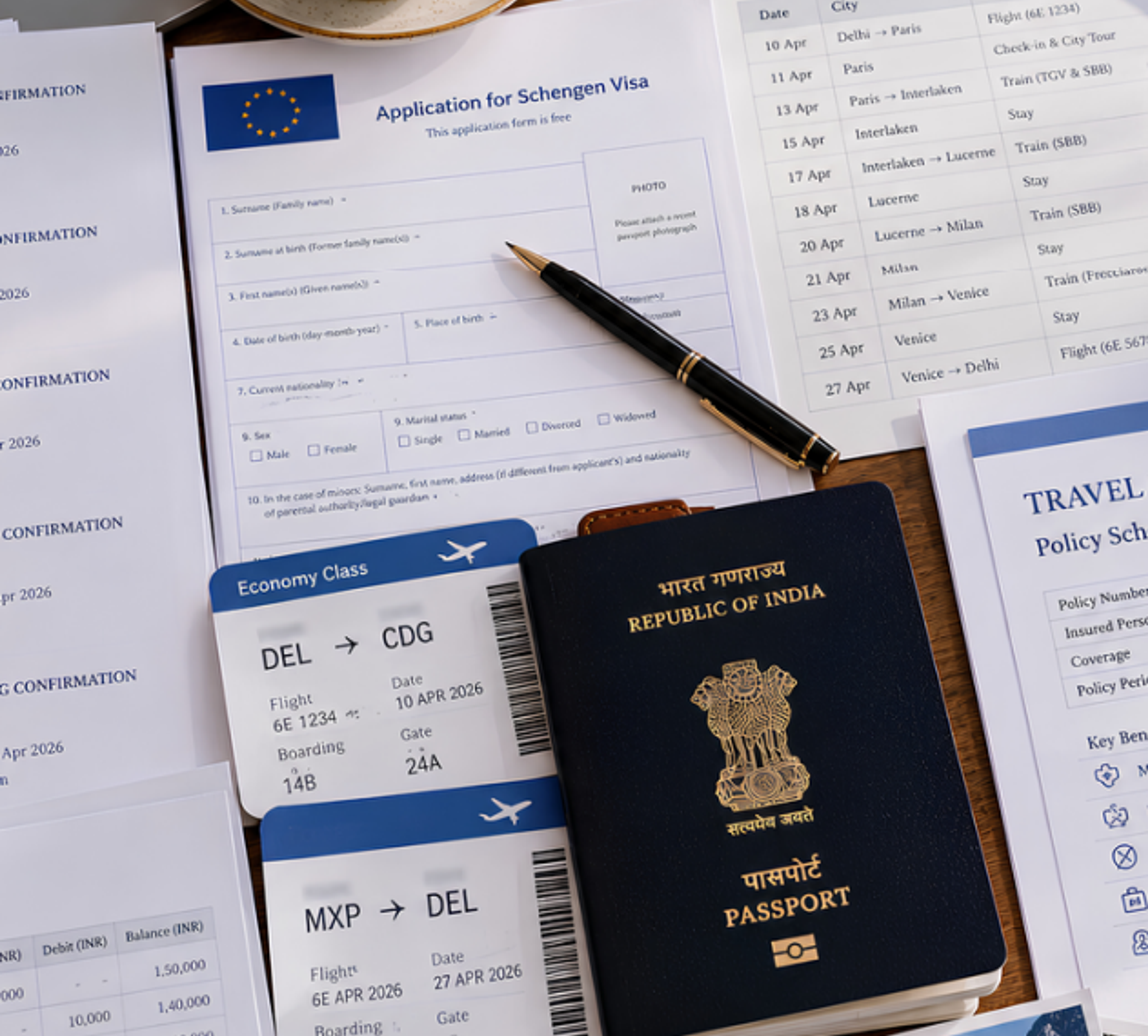
You have picked Parisian cafés, Swiss mountains and Italian pasta. There is just one small thing between you and that trip: the visa paperwork. It need not become the most memorable part of your holiday.
Best for: Indian passport holders | Visa: Short-stay Schengen (Type C) | Focus: Genuine documents + early planning
1. What does a Schengen visa cover?
A uniform short-stay Schengen visa generally allows travel around the Schengen Area for up to 90 days in any 180-day period, subject to the visa issued. France, Switzerland and Italy are all Schengen countries. But a visa does not itself guarantee entry at the border.
2. Which country should you apply to?
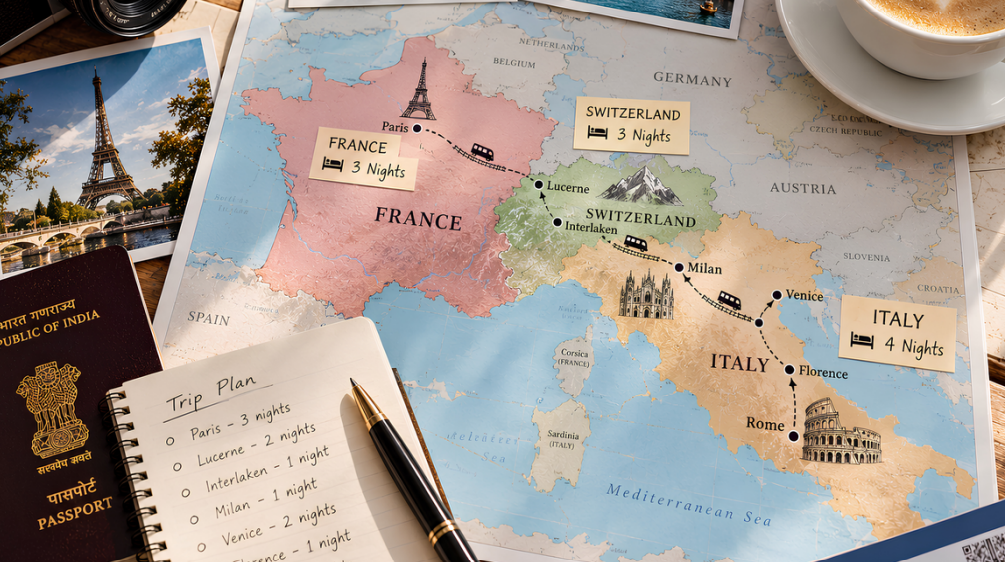
The application normally belongs with the country of your main destination, determined by the length or purpose of stay. If no main destination can be identified, the first-entry rule applies.
Example trip -Nights
France - 3
Switzerland - 4
Italy - 2
In this tourism example, Switzerland is normally the country to apply to because it has the longest stay. Don’t manipulate an itinerary simply to get a convenient appointment.
3. When should you start?
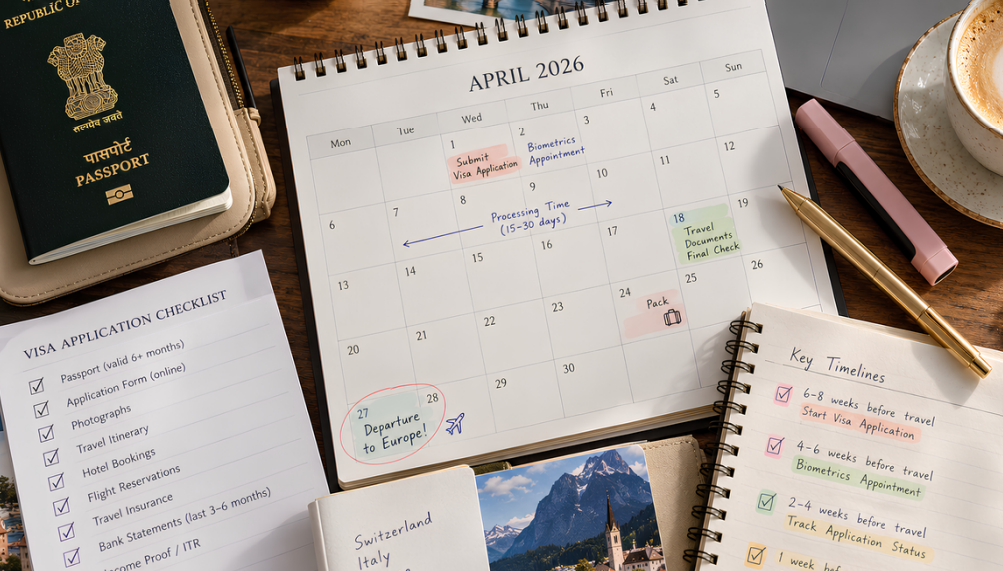
You may generally apply as early as six months before travel, and applications should ordinarily be lodged at least 15 calendar days before departure. Normal decisions often take about 15 calendar days, but some may require up to 45 days. Appointments and passport transport can add delays.
Practical advice: Start gathering requirements roughly two to three months before a trip when possible, especially for peak travel dates. Nobody wants to refresh a visa tracking page every twelve minutes.
4. What documents should you prepare?
- Valid passport, application form and compliant photographs.
- Travel itinerary and accommodation details.
- Financial documents and evidence of employment/business or sponsorship as relevant.
- Travel medical insurance that meets applicable Schengen requirements.
- Any additional documents in the country-specific official checklist.
A passport generally must be valid at least three months after planned departure from the Schengen Area and must meet other passport conditions. Always use the current checklist from the relevant mission or authorised visa centre.
5. What about the bank balance?
There is no single universal account balance that guarantees approval. Required means can differ by destination and circumstances. Your itinerary, funding and supporting evidence should be genuine and consistent. A mysterious last-minute deposit is not a substitute for a clear financial story.
6. Five mistakes to avoid
- Leaving appointments until the last minute.
- Using inconsistent travel dates across forms and reservations.
- Applying through the wrong country.
- Submitting false, unverifiable or misleading evidence.
- Assuming a complete application guarantees approval.
7. Travelling as a family?

Leave extra planning time when travelling with children and family
Every family member may need an application, and minors can require additional birth and consent documents. If parents or grandparents are joining, think through appointments, accessibility and document organisation ahead of time.
8. What are the fees?
The standard adult short-stay fee is €90; children aged six to under twelve generally pay €45, while children under six are generally exempt from the visa fee. Application-centre service charges may be extra. Confirm the current rate and local currency amount before paying.
9. Once the visa arrives
Check validity dates, length of stay and permitted entries on the sticker. Keep important travel documents available when travelling. Then get back to the fun decisions — like choosing between an extra museum and an extra gelato.
A thoughtful holiday begins before you fly
Plan a personalised holiday with GoTravelBlue. Thoughtful routes, carefully chosen stays and experiences that feel like you.
Keep reading

Planning a multi-country Europe trip by train? Learn how to choose the right route, balance travel time and sightseeing, and build a relaxed itinerary without rushing from one destination to the next.
19 October 2026 · 5 min read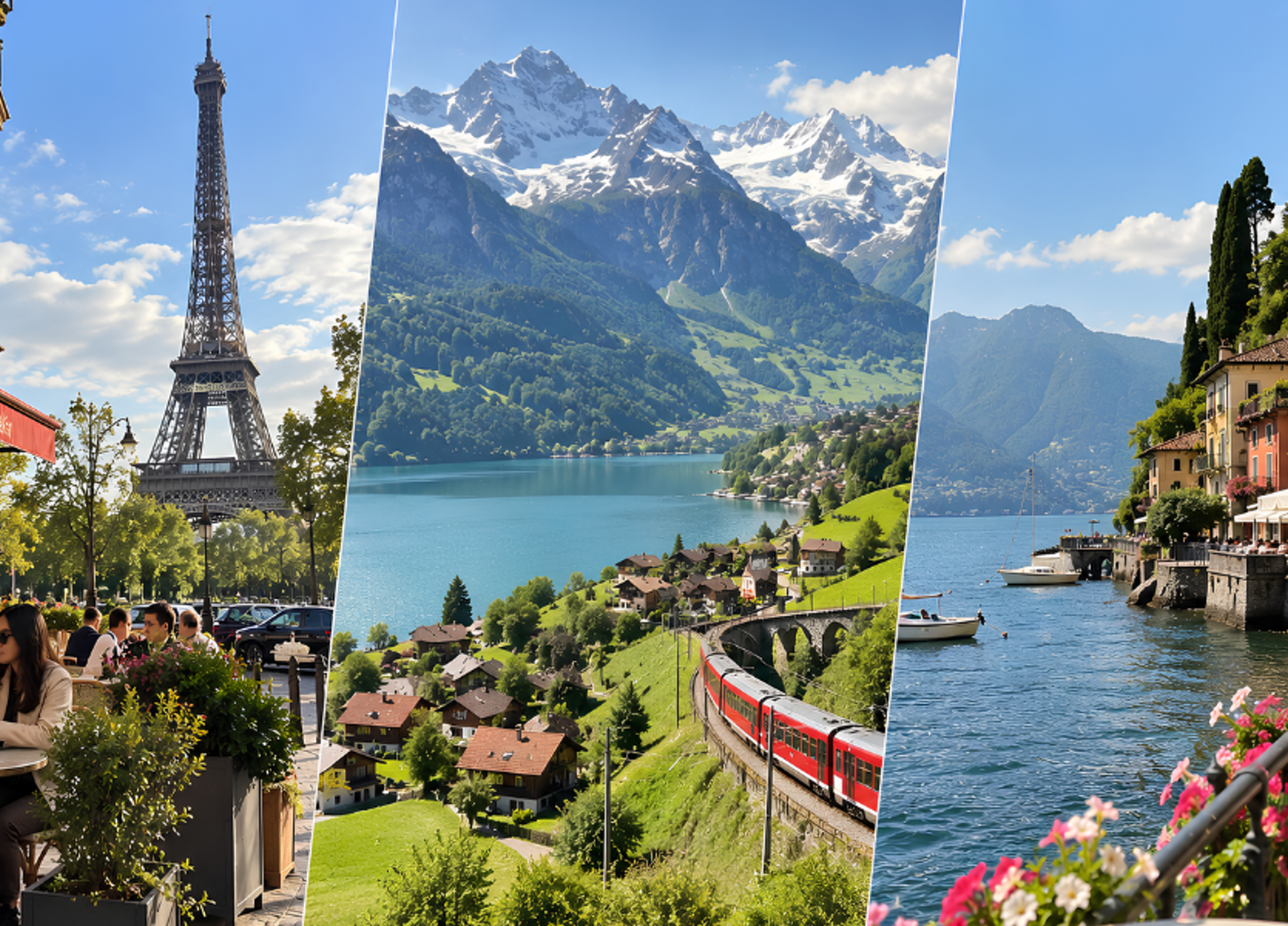
Planning France, Switzerland and Italy in 10 days? Discover a practical route for first-time visitors, with the right balance of iconic cities, scenic journeys and enough time to enjoy each destination.
17 October 2026 · 5 min read
A practical guide to planning your Switzerland holiday from India, covering the best time to visit, ideal itinerary, estimated costs, Schengen visa and essential travel tips. Copy excerpt
17 October 2026 · 5 min readThinking about your next trip?
Tell us who's travelling and when — an advisor will call you back. Or take your time: our monthly email is one idea a month, nothing more.
